Containment first
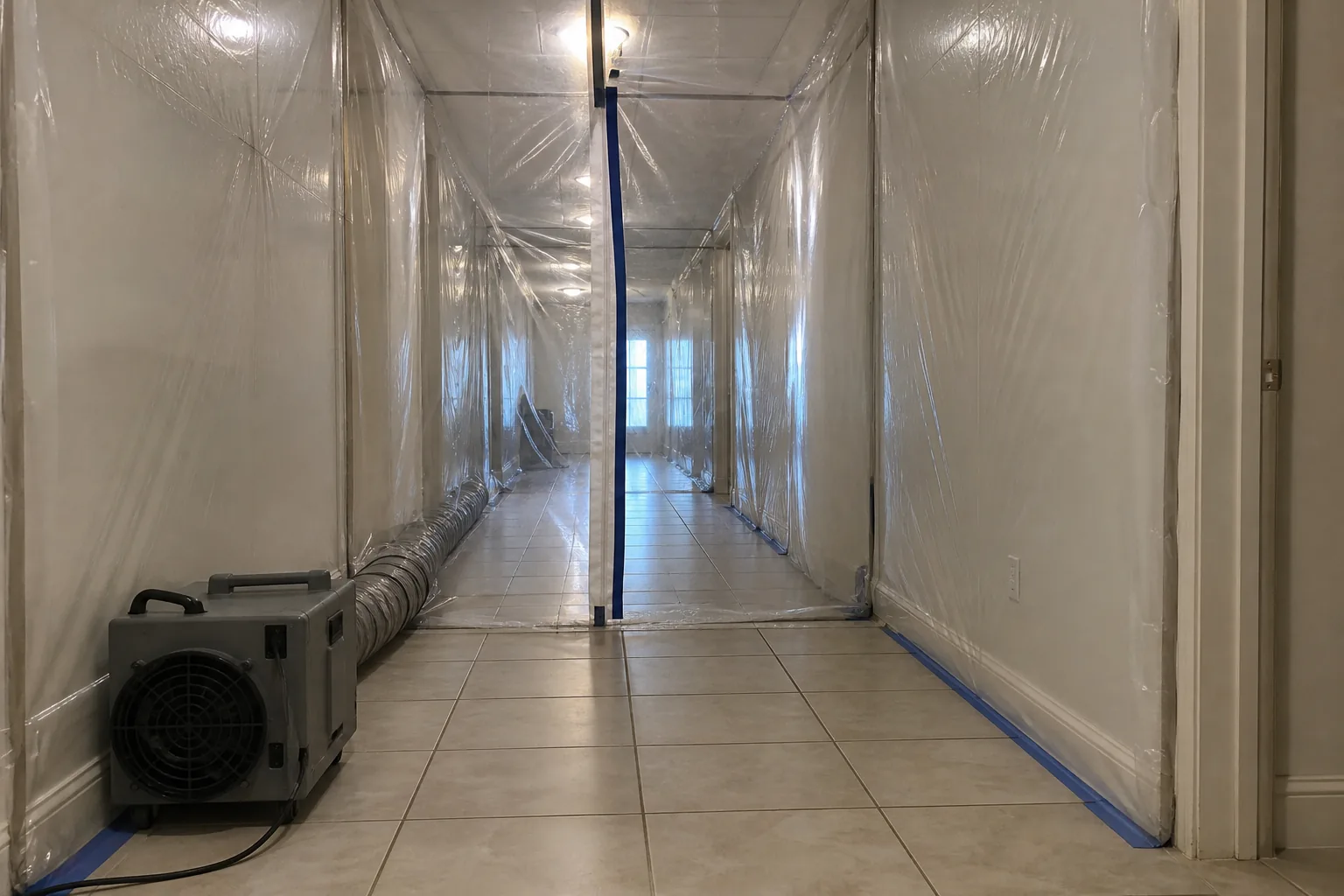
We isolate the work area with plastic barriers and controlled access so disturbed spores stay in the remediation zone rather than spreading into living areas or HVAC returns.
Serving Orlando, Florida & surrounding areas
24/7 Emergency Response
Mold Remediation in Orlando, Florida
If you smell a musty odor, see staining, or have had a recent leak, our certified technicians can inspect, contain, remove, and help prevent mold growth with a clear scope of work before remediation starts.
Central Florida heat and humidity can turn a small moisture problem into a larger indoor air issue. Controlled containment, drying, and documentation address the cause—not only the visible spot.
Controlled Mold Remediation
If you are searching for a mold remediation company Orlando residents can trust, you are likely dealing with one of the most common Central Florida realities: heat, humidity, and a small moisture problem that turns into a bigger indoor air issue.
Effective mold remediation in Orlando is not bleach and a fan. A real remediation controls where spores travel, removes contaminated materials when needed, cleans what can be saved, and verifies the area is dry so mold does not come right back.
Water Damage Orlando provides Orlando mold remediation for homes and small commercial spaces with a process built around containment, negative air, HEPA filtration, and moisture tracking. You get a written scope, clear next steps, and straightforward communication from inspection through clearance.
Call Now +1 689 220 2026A Defined Scope of Work
We isolate the work area with plastic barriers and controlled access so disturbed spores stay in the remediation zone rather than spreading into living areas or HVAC returns.
Air scrubbers and HEPA filtration capture fine particulates during demo and cleaning. When the setup calls for it, negative pressure keeps airflow moving into the containment, not out of it.
Remediation that ignores moisture is temporary. We trace the wetness path and document readings so drying and repairs can be planned around facts, not guesses.
Non-porous surfaces can often be cleaned and treated, while porous items like some drywall, insulation, and carpet pad may need removal when impacted.
You receive a defined work plan, the containment approach, what is being removed vs. cleaned, and what conditions need to be met before we demobilize.
We use appropriate PPE, controlled bag-out, and jobsite housekeeping so the work is done cleanly and responsibly.
Inspect Beyond the Visible Spot
Orlando mold remediation calls often start with a smell or a small patch that appears after an AC issue or a plumbing leak. In practice, we frequently find mold in places that stay warm and damp or that had hidden water for more than a day or two.
Common areas include:
Neighborhood housing styles can influence where we look first. In Conway and the Hourglass District, we often see older homes with additions or past remodels where airflow and vapor control vary room to room. In Lake Nona, newer construction can still have mold risk if a leak is trapped behind finishes or if the home stayed closed up during periods of high humidity. In Baldwin Park, tight building envelopes can hold humidity indoors if the HVAC is not dehumidifying well.
The goal is not to scare you. It is to explain why inspection matters: the visible spot is sometimes the smallest part of the problem.
Call Now +1 689 220 2026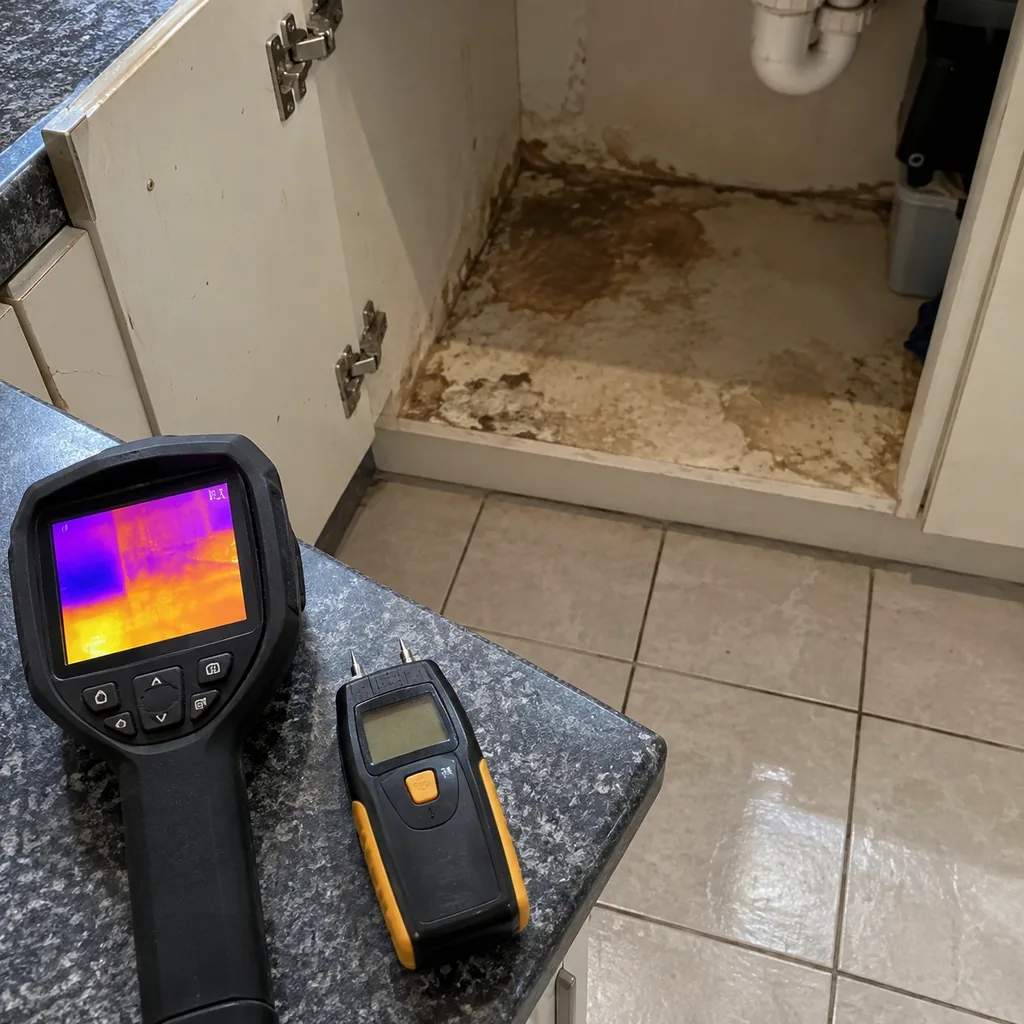
Contained From Start to Finish
We identify suspect areas, take moisture readings, and determine what materials are likely impacted. If testing is part of your plan, we coordinate it so results match the remediation scope.
We define the remediation area, protect adjacent surfaces, and set containment with barriers, a zipper door, and planned equipment placement. For larger or sensitive jobs, we establish negative air.
If drywall, insulation, carpet pad, or other porous materials are impacted, they are removed and bagged out under controlled conditions. We keep demo limited to what is necessary for access and proper removal.
We clean affected framing and hard surfaces using appropriate antimicrobial methods, then HEPA vacuum and wipe down so residue is not left behind.
If the area is still wet, we set drying and monitor readings. Mold risk stays high until materials return to normal moisture levels for the space.
We review the completed scope with you and confirm the area is ready for any post-remediation verification or rebuild work that is planned.
Written Pricing Scope
Mold remediation in Orlando typically ranges from about $1,000 to $3,500 for a small, contained area, while larger or multi-room projects often run $4,000 to $10,000+ depending on how much material must be removed and how complex the containment is.
Price changes with the square footage affected, how far mold has spread behind finishes, whether negative air is required, access such as tight attic or crawl spaces, and whether drying equipment is needed because the area is still wet. The exact cost is confirmed after an on-site inspection and written scope.
Call Now +1 689 220 2026Compare the Plan, Not Only the Price
When you compare quotes for mold remediation of Orlando properties, you will see big differences in what is included. The safest way to compare is to ask each company to explain the plan, not just the price.
Also, be cautious of bids that skip moisture mapping or treat mold as a simple surface cleaning. If the underlying wetness remains, the problem often returns and you pay twice.
If your mold issue followed a leak, overflow, or storm-related intrusion, it can be helpful to review your broader situation with an Orlando team that also handles water damage restoration in Orlando. That way the drying, demo, and remediation plan is coordinated instead of pieced together.
Call Now +1 689 220 2026Straight Answers Before Work Starts
Most smaller jobs take 1 to 3 days on site, while larger projects can take a week or more when multiple rooms, extensive demo, or drying are required. Timeline depends on how much material must be removed, whether the area is still wet, and how quickly moisture readings return to normal for the structure.
Often you can stay home if the remediation area is fully contained and isolated from main living spaces, but it depends on location, sensitivity, and how much work is being done. If the affected area is near bedrooms, returns, or high-traffic paths, we may recommend limiting access until the cleanup and air filtration steps are complete.
Sometimes, yes, but only when the affected material is non-porous or the mold is truly on the surface and the moisture source is resolved. If drywall, insulation, or other porous materials are impacted, removal is often necessary because mold can grow into the material where cleaning cannot reach.
Mold removal usually describes cleaning what you can see, while remediation addresses the full problem: containment, removal of unsalvageable materials, cleaning, and correcting conditions that allow mold growth. For Orlando mold remediation, moisture control is a required part of making the work last.
Yes. A remediation plan should include moisture mapping and a practical explanation of likely causes such as a plumbing leak, condensation around an air handler, or water intrusion behind exterior walls. If the source is still active, remediation should pause until the moisture issue is corrected or drying is in place.
Many homeowners start by documenting what happened, when it happened, and what areas are affected, then checking coverage for the specific cause of loss. We can provide job documentation and a clear scope so you have the details needed for claim conversations, but coverage decisions depend on your policy and the origin of the moisture.
Start With an On-Site Inspection
Tell us what you are seeing and where it started. We will schedule an on-site inspection in Orlando, explain the containment approach, and provide a written scope so you can make a confident decision.